
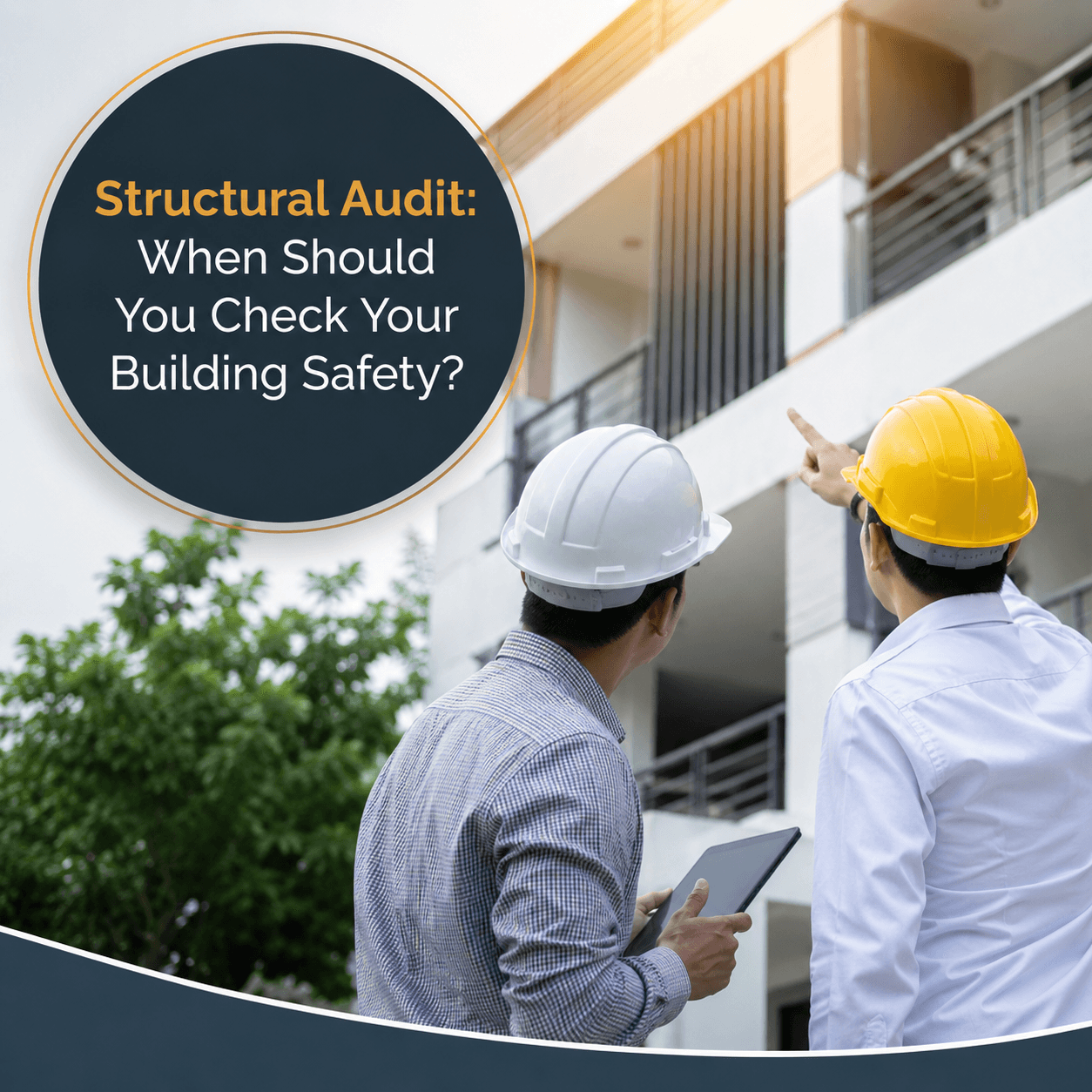
With rapid urbanization, increasing high-rise constructions, and aging infrastructure, ensuring building safety is no longer optional—it’s essential. Many property owners focus heavily on aesthetics and interiors, but often overlook the most crucial aspect: structural integrity.
A building may look perfect on the outside, but hidden weaknesses in its building structure design can lead to serious risks over time. This is where a structural audit becomes vital.
Whether it’s a residential home, commercial complex, or industrial structure, timely inspection by a structural design engineer can prevent costly repairs—and even save lives.
What Is a Structural Audit?
A structural audit is a detailed technical assessment of a building’s condition to evaluate its safety, strength, and durability.
It involves examining key structural elements such as:
- Foundations
- Columns and beams
- Slabs and load-bearing walls
- Reinforcement conditions
- Signs of distress like cracks, corrosion, or settlement
The audit is conducted by a structural design consultant using principles of structural analysis and design to determine whether the building is safe or requires repairs.
When Should You Conduct a Structural Audit?
Timing is everything. Here are the most important scenarios where a structural audit is necessary:
Recommended Audit Timelines
| Building Type | When to Conduct Audit |
| New Buildings | Within 5 years of construction |
| Residential Buildings | Every 10–15 years |
| Commercial Buildings | Every 5–10 years |
| Old Buildings (20+ years) | Every 3–5 years |
Situations That Demand Immediate Audit
- Visible cracks in walls, beams, or columns
- Water leakage or dampness affecting the structure
- Corrosion of steel reinforcement
- Earthquake or natural disaster impact
- Change in building usage (e.g., residential to commercial)
- Additional floor construction
Key Components of a Structural Audit
A comprehensive audit includes multiple technical evaluations:
| Component | Purpose |
| Visual Inspection | Identify cracks, deflection, and visible damage |
| Material Testing | Check strength of concrete and steel |
| Structural Analysis | Evaluate load-bearing capacity using engineering models |
| Foundation Assessment | Detect settlement or soil-related issues |
| Non-Destructive Testing | Use rebound hammer, ultrasonic pulse velocity, etc. |
| Repair Recommendations | Suggest retrofitting or strengthening methods |
Why Structural Audit Matters
Ignoring structural health can lead to serious consequences. Here’s why audits are essential:
- Ensures Safety
A timely audit prevents accidents caused by structural failure.
- Extends Building Life
With proper maintenance and structural design and detailing, buildings can last decades longer.
- Saves Money
Early detection of issues avoids expensive repairs later.
- Legal Compliance
Many municipalities require structural audits for older buildings.
- Supports Renovation Decisions
Before modifying a structure, an audit ensures it can handle additional loads.
Common Structural Problems Identified During Audits
- Cracks due to poor structural analysis and design
- Corrosion caused by moisture ingress
- Weak foundations due to soil settlement
- Overloading beyond design capacity
- Poor quality construction materials
Role of a Structural Design Engineer in Audits
A qualified structural design engineer plays a critical role in:
- Conducting detailed inspections
- Performing load calculations
- Analyzing stress and strain in structural members
- Recommending repair or retrofitting techniques
- Ensuring compliance with IS codes and safety standards
Their expertise ensures your building is not just functional—but safe and future-ready.
Structural Audit vs. Regular Maintenance
| Aspect | Structural Audit | Regular Maintenance |
| Focus | Structural safety and load capacity | Surface-level repairs |
| Conducted By | Structural design consultant | Contractors or technicians |
| Frequency | Periodic (5–10 years) | Regular (monthly/yearly) |
| Outcome | Detailed technical report | Basic repairs and upkeep |
Our Service Call Now for a Free Estimate
Conclusion: Safety Today, Stability Tomorrow
A building is not just bricks and concrete—it’s a long-term investment, a workspace, or a home filled with memories. Ensuring its safety through regular structural audits is a responsibility every owner must take seriously.
With expert guidance in building structure design, structural design and detailing, and advanced structural analysis and design, you can protect both your investment and the people inside it.
Don’t wait for visible damage. Prevent it before it happens.
Book Your Structural Audit Today with Experts
At Elite Blueprints Consultancy, our experienced structural design consultants and engineers provide comprehensive audits, safety reports, and strengthening solutions tailored to your building.
📞 Call Us Today: +91-82500 86323, +91-97497 48143
🌐 Visit: www.ebcsiliguri.com
📍 Based in Siliguri | Serving India
Strong buildings start with smart decisions — let’s secure yours today.
FAQs About Structural Audits
Q1: Is a structural audit expensive?
No. Compared to the cost of repairs or rebuilding, a structural audit is a small but valuable investment.
Q2: Can I skip a structural audit if my building looks fine?
Not advisable. Many structural issues are not visible on the surface.
Q3: How long does a structural audit take?
Typically 3–7 days depending on the building size and complexity.


Comments are closed