
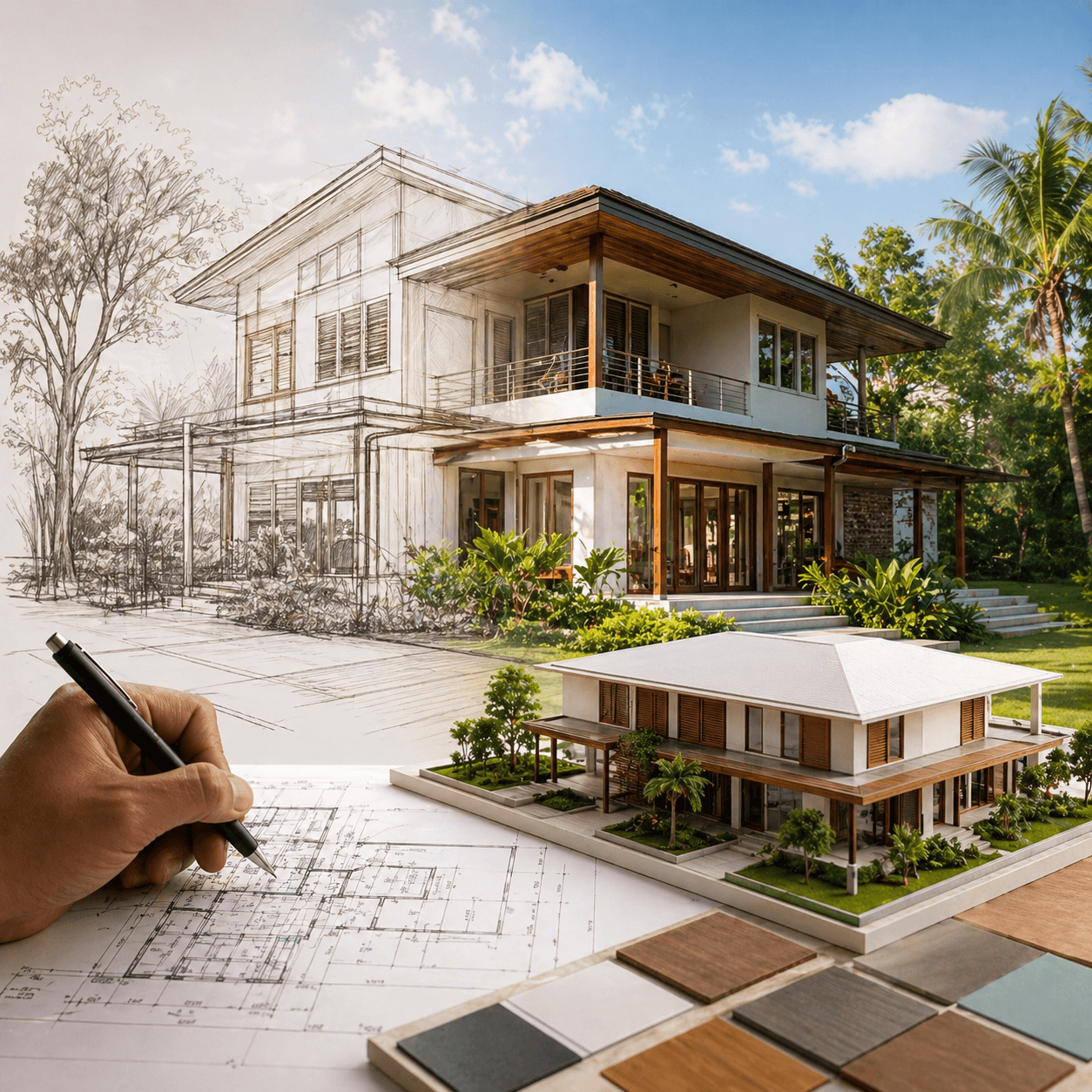
In regions like Siliguri and much of Eastern India, the climate is predominantly hot and humid — characterized by high temperatures, heavy rainfall, and moisture-laden air. This makes climate-based building planning and design not just a luxury, but a necessity.
Today, homeowners are going beyond aesthetics and focusing on functionality, comfort, and sustainability. Whether it’s a commercial building plan or residential building plans, designing according to climate conditions can significantly reduce energy costs, improve indoor comfort, and enhance the lifespan of the structure.
If you’re planning your dream home design in Siliguri, understanding climate-responsive architecture is the first step toward smarter living.
What is Climate-Based House Planning?
Climate-based house planning is the process of designing buildings that respond to local weather conditions—maximizing natural ventilation, minimizing heat gain, and controlling humidity.
In hot and humid regions, the goal is simple: Keep the heat out, allow air in, and manage moisture effectively.
Key Principles of Designing for Hot & Humid Climates
Here are the most important principles used in building planning and drawing for such climates:
- Orientation of the Building
- Position longer walls facing north-south
- Minimize direct sunlight exposure on east-west walls
- Reduce heat gain throughout the day
- Cross Ventilation
- Place windows and openings on opposite walls
- Allow natural airflow to remove heat and humidity
- Elevated Structures
- Raise plinth level to avoid dampness and flooding
- Improves airflow beneath the structure
- Shading Devices
- Use chajjas, louvers, pergolas, and verandahs
- Protect walls and windows from direct sunlight and rain
- Lightweight Construction Materials
- Materials that don’t retain heat (e.g., AAC blocks, hollow bricks)
- Reduce indoor temperature naturally
Best Design Strategies for Hot & Humid Homes
Here’s a practical breakdown of strategies used in residential building plans and commercial building plan designs:
| Strategy | Purpose | Benefit |
| Large Windows | Improve airflow | Natural cooling |
| High Ceilings | Allow hot air to rise | Better ventilation |
| Sloped Roofs | Quick rainwater drainage | Prevents leakage & dampness |
| Courtyard Planning | Internal ventilation | Natural cooling + aesthetics |
| Verandahs & Balconies | Shade + airflow buffer | Reduced heat entry |
| Light-Colored Walls | Reflect sunlight | Lower heat absorption |
Materials Best Suited for Hot & Humid Climate
Choosing the right materials is crucial in building planning and design.
Recommended Materials:
- AAC Blocks – Lightweight and thermal resistant
- Fly Ash Bricks – Durable and moisture-resistant
- Terracotta Tiles – Natural cooling properties
- Anti-fungal Paints – Prevent mold growth
- UPVC Windows – Weather-resistant and low maintenance
Avoid:
- Excessive glass façades (trap heat)
- Heavy concrete roofs without insulation
- Poor-quality wood prone to moisture damage
Common Mistakes to Avoid
Even well-designed homes can fail if climate factors are ignored.
- Poor ventilation planning
- Flat roofs without waterproofing
- Dark exterior colors (absorb heat)
- Ignoring rainwater drainage systems
- Over-dependence on AC instead of passive cooling
Smart Features for Modern Homes in Siliguri
For a truly optimized dream home design in Siliguri, integrate these modern solutions:
- Rainwater Harvesting Systems
- Solar Panels for Energy Efficiency
- Smart Ventilation Systems
- Moisture Sensors in Walls
- Green Roofs or Terrace Gardens
These features not only improve comfort but also increase long-term property value.
Real Insight: Why It Matters in Siliguri
Siliguri’s climate includes:
- High humidity (70–90%)
- Heavy monsoon rainfall
- Warm summers
Without proper building planning and drawing, homes can face:
- Damp walls
- Mold growth
- Excessive heat buildup
- High electricity bills
That’s why climate-responsive design is not optional — it’s essential.
Conclusion: Build Smart, Live Comfortable
Designing for hot and humid climates is about working with nature, not against it. A well-planned home doesn’t just look good — it feels good, performs better, and lasts longer.
Whether you’re planning a modern villa or a functional commercial space, integrating climate-based strategies into your building planning and design ensures comfort, efficiency, and sustainability.
Your dream home should not fight the climate — it should flow with it.
Ready to Design Your Climate-Perfect Dream Home?
At Elite Blueprints Consultancy, we specialize in climate-responsive building planning and drawing, customized residential building plans, and efficient commercial building plan designs tailored for regions like Siliguri.
📞 Call Us Today: +91-82500 86323, +91-97497 48143
🌐 Visit: www.ebcsiliguri.com
📍 Based in Siliguri | Serving India
Let’s design a home that stays cool, comfortable, and future-ready — all year round.
FAQs About Climate-Based House Planning
Q1: Is climate-based design expensive?
Not necessarily. While initial planning may require expert input, it reduces long-term electricity and maintenance costs significantly.
Q2: Can I apply these principles to small residential homes?
Absolutely. Even small residential building plans can benefit from cross ventilation, proper orientation, and material selection.
Q3: Is this applicable to commercial buildings as well?
Yes. A well-designed commercial building plan can reduce cooling costs and improve employee productivity.


Comments are closed