
Why Plot Preparation Matters More Than Ever in 2026
With rising construction costs, stricter regulations, and increasing focus on sustainability, plot preparation for construction has become one of the most critical phases of any building project in 2026. Whether you are planning a residential home or a commercial building, proper land preparation before construction ensures structural safety, legal compliance, and cost control.
Many property owners make the mistake of jumping straight into foundation work without completing essential construction site preparation steps. This leads to drainage issues, weak foundations, legal disputes, and costly redesigns.
This guide provides a complete plot development checklist 2026 to help you prepare your land correctly — before a single brick is laid.
What Does Plot Preparation for Construction Mean?
Plot preparation is the process of making land ready for construction by conducting surveys, clearing the site, testing soil, marking boundaries, planning drainage, and completing legal checks.
It forms the base of:
- Structural design
- Foundation planning
- Cost estimation
- Construction scheduling
Without proper site preparation for building construction, even the best architectural design can fail.
Step-by-Step Plot Development Process (2026 Edition)
1. Land Survey for Construction
A professional land survey service for construction identifies:
- Exact plot dimensions
- Levels and slopes
- Existing structures
- Road alignment
- Encroachments
Why it matters:
Ensures accurate layout and avoids boundary disputes.
2. Legal Checks Before Construction
Before physical work begins, complete all land documentation before construction, including:
- Sale deed verification
- Conversion certificate (if agricultural land)
- Municipal approvals
- Zoning clearance
- Encumbrance certificate
This step is mandatory in plot preparation in India.
3. Site Clearance for Construction
This involves:
- Removing trees, bushes, debris
- Demolishing old structures
- Clearing waste materials
Also known as construction site planning and cleaning.
4. Plot Demarcation and Boundary Marking
Plot demarcation for construction includes:
- Fixing corner points
- Marking plot limits
- Installing temporary fencing
This is called boundary marking before construction and prevents:
- Encroachment
- Layout mistakes
- Neighbor disputes
5. Soil Testing Before Construction
One of the most important steps in civil engineering site preparation.
Soil testing checks:
- Load bearing capacity
- Moisture content
- Type of soil
- Groundwater level
Used for:
- Foundation preparation checklist
- Structural design
- Cost estimation
Never skip soil testing before construction — it directly impacts building safety.
6. Plot Leveling and Land Grading
Includes:
- Cutting high points
- Filling low areas
- Achieving uniform slope
Also called:
- Land grading and leveling
- Plot leveling and soil testing
Purpose:
- Proper drainage
- Stable foundation
- Reduced excavation cost
7. Excavation and Earthwork Preparation
This step involves:
- Digging foundation pits
- Trenches for utilities
- Removing unsuitable soil
Known as excavation and earthwork preparation, it prepares the plot for:
- Footings
- Basement
- Underground tanks
8. Land Filling and Compaction
Low-lying plots require:
- Controlled soil filling
- Mechanical compaction
Land filling and compaction ensures:
- No settlement later
- Uniform soil strength
- Stable load transfer
9. Drainage Planning for Plot
Essential in construction site readiness checklist.
Includes:
- Stormwater channels
- Rainwater harvesting
- Slope design
- Groundwater control
Proper drainage planning for plot prevents:
- Waterlogging
- Foundation damage
- Structural cracks
10. Vastu-Compliant Plot Preparation (Optional)
For those following Vastu:
- Plot orientation
- Entrance direction
- Slope direction
- Borewell location
This is called vastu compliant plot preparation and is common in residential plot preparation guide practices.
Construction Site Readiness Checklist
| Task | Status |
| Land survey completed | ✔ |
| Legal documents verified | ✔ |
| Site cleared | ✔ |
| Boundaries marked | ✔ |
| Soil testing done | ✔ |
| Plot leveled | ✔ |
| Drainage planned | ✔ |
| Excavation completed | ✔ |
| Compaction done | ✔ |
| Layout approved | ✔ |
This is your pre construction checklist for plot.
Read also: Why Exterior Design Is More Than Just Looks
Residential vs Commercial Plot Preparation
| Aspect | Residential Plot | Commercial Plot |
| Soil testing depth | Moderate | Deeper |
| Drainage load | Low | High |
| Excavation | Shallow | Deep |
| Load design | Light | Heavy |
| Legal scrutiny | Medium | High |
This distinction helps in commercial plot preparation steps.
Common Mistakes to Avoid in Plot Preparation
- Skipping soil testing
- Ignoring drainage
- No boundary marking
- Poor compaction
- No land survey
- Starting construction before approvals
These mistakes delay projects and increase cost.
Conclusion: A Well-Prepared Plot Builds a Strong Home
A building is only as strong as the land beneath it. Proper plot preparation for construction is no longer optional — it is the foundation of safety, legality, and durability.
Following this plot development checklist 2026 ensures:
- Structural stability
- Cost efficiency
- Legal security
- Smooth construction
- Long-term performance
Whether it is a house or a commercial building, proper site preparation for building construction is the smartest investment you can make.
Planning to build in 2026? Start with expert plot preparation.
At Elite Blueprints Consultancy, we provide:
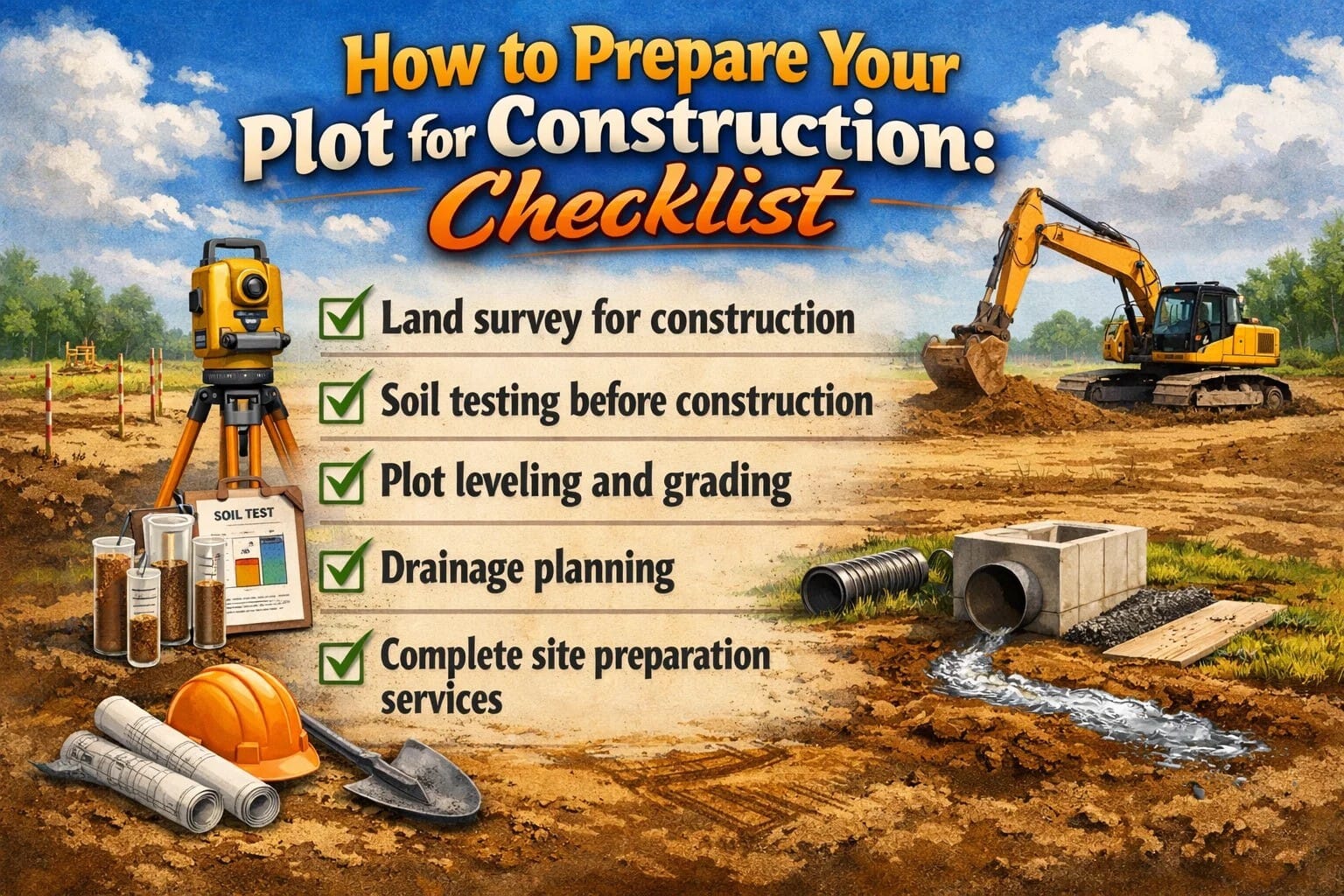
✔ Land survey for construction
✔ Soil testing before construction
✔ Plot leveling and grading
✔ Drainage planning
✔ Complete site preparation services
📞 Call Us Today: +91-82500 86323, +91-97497 48143
🌐 Visit: www.ebcsiliguri.com
📍 Based in Siliguri | Serving, Delhi, Mumbai, West Bengal, Bihar, Uttar Pradesh, Assam, Guwahati
Build strong. Build smart. Start with the right plot preparation.
FAQs
Q1: How long does plot preparation take?
Usually 2–4 weeks depending on plot size and soil condition.
Q2: Is soil testing mandatory in India?
Highly recommended and required for multi-storey structures.
Q3: Can I prepare plot without engineer supervision?
Not advisable. Civil engineering site preparation needs professional control.
Read also: G+1, G+2, or G+3: What Is Ideal for Your Plot Size?
Read also: Mivan Shuttering vs Conventional Shuttering: Which Is Better?


Comments are closed