
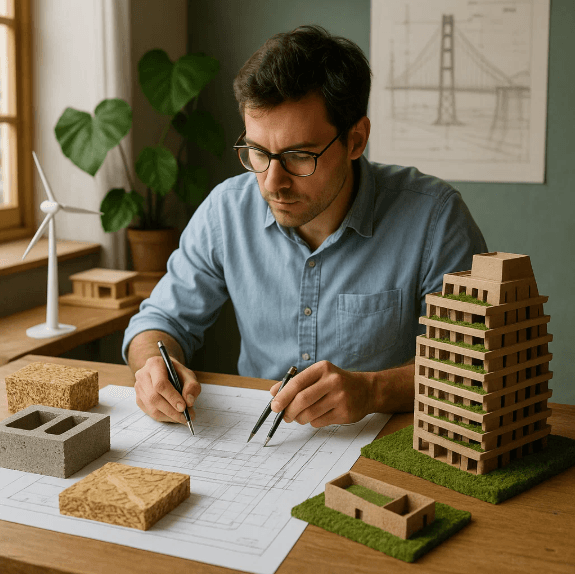
Building a Greener Future, One Brick at a Time
As the world steps into 2025, the construction industry is undergoing a massive transformation. Gone are the days when projects were measured only by strength and aesthetics — today, sustainability is the new standard.
With urban expansion and climate awareness on the rise, civil engineering and architecture are embracing green innovations to minimize carbon footprints, reduce waste, and create energy-efficient structures. Across India, especially in growing cities like Siliguri, there’s a noticeable shift toward eco-friendly materials that are as durable as they are sustainable.
What Are Green and Sustainable Materials in Construction?
Definition:
Green and sustainable materials are those that are produced, used, and disposed of with minimal environmental impact. They are recyclable, locally sourced, energy-efficient, and often made using renewable or waste-based resources.
These materials help:
- Reduce energy consumption during construction
- Lower greenhouse gas emissions
- Promote healthier indoor air quality
- Increase the lifespan of buildings
Why Sustainability Matters in Civil Engineering and Architecture
Civil engineers and architects are now not only builders — they are guardians of the planet. The choices they make directly influence the carbon footprint of a structure for decades.
By integrating sustainability from the design phase to the execution stage, professionals can ensure:
- Reduced operational costs
- Better structural efficiency
- Enhanced property value
- Compliance with green building standards (like IGBC or GRIHA)
According to recent studies, green buildings can reduce energy use by up to 30% and water consumption by 20% compared to traditional constructions.
Read also: 5 Common Site Planning Errors That Can Delay Your Project
Top Sustainable Construction Materials in 2025
Here’s a look at the most trending eco-friendly materials reshaping civil engineering and architecture this year:
Sustainable Material | Description | Key Benefits |
Bamboo | Fast-growing, renewable material ideal for flooring, walls, and scaffolding | Lightweight, durable, carbon-neutral |
Recycled Steel | Made from scrap steel; replaces traditional reinforcement materials | High strength, reduces mining waste |
Fly Ash Concrete | A byproduct of coal combustion used as cement replacement | Lowers CO₂ emissions, improves durability |
| Recycled Plastic Bricks | Made from shredded and molded plastic waste | Affordable, lightweight, weather-resistant |
Hempcrete | Bio-composite of hemp fibers and lime | Thermal insulation, breathable, mold-resistant |
Low-VOC Paints | Paints with low volatile organic compounds | Improves indoor air quality, safer for workers |
Cork and Coir Panels | Natural materials used in insulation and wall panels | Renewable, biodegradable, soundproofing |
Solar Reflective Roofing | Tiles or paints that reflect solar radiation | Keeps interiors cooler, reduces AC usage |
Emerging Trends in Green Construction for 2025
Civil engineering consultants and architects are integrating technology and sustainability in exciting new ways. Here are the latest trends you’ll see across projects:
- Net-Zero Energy Buildings (NZEBs):
Structures that generate as much energy as they consume using solar panels and smart systems. - 3D Printed Sustainable Homes:
Use of recycled concrete and locally sourced materials to reduce waste and labor. - Green Facades & Vertical Gardens:
Integrating greenery into exterior walls to enhance insulation and aesthetics. - Smart Water Management Systems:
Greywater recycling, rainwater harvesting, and low-flow fixtures are becoming the norm. - Circular Construction:
Focus on reuse, recycling, and repurposing materials from demolished structures.
Read also: Room by Room Vastu Guidelines: Best Floor Plan Layouts for Kitchen, Bedroom & Puja Room
How Civil Engineering Consultants Drive Sustainable Innovation
Civil engineering consultants play a pivotal role in ensuring sustainability is not just a design concept but a practical reality. Their expertise lies in balancing environmental responsibility with structural performance.
Here’s how they contribute:
- Conducting life cycle assessments to choose durable, low-impact materials
- Designing energy-efficient structures using simulation tools
- Incorporating green certifications into project planning
- Advising clients on sustainable procurement and waste reduction
- Supervising construction for minimal environmental disruption
In 2025, the collaboration between civil engineering consultants and architects defines the success of every eco-conscious project.
Conclusion: Building Smarter, Greener, and Stronger in 2025
The construction industry is not just building structures anymore — it’s building a legacy of sustainability. The integration of green materials, innovative design, and responsible engineering is shaping the blueprint of modern infrastructure.
Whether you’re planning a residential project or a commercial development, the future lies in eco-conscious design powered by expert civil engineering and architecture.
Ready to Build a Greener Future?
At Elite Blueprints Consultancy, we specialize in combining sustainability with strength. Our team of civil engineering consultants and architectural experts ensures every project aligns with both modern aesthetics and environmental responsibility.
- Green-certified design & execution
- Cost-effective eco-material integration
- End-to-end project management
📞 Book a Free Green Construction Consultation Today!
🌐 Visit: www.ebcsiliguri.com
📍 Based in Siliguri | Serving India
Let’s design a world where every building breathes sustainability.
FAQs About Green and Sustainable Materials
Q1: Are sustainable materials more expensive than traditional ones?
Initially, some may cost more, but they offer long-term savings through lower energy bills, durability, and minimal maintenance.
Q2: Can eco-friendly materials perform as well as conventional materials?
Absolutely. Materials like bamboo, fly ash concrete, and recycled steel often exceed traditional performance standards in strength and efficiency.
Q3: Are sustainable materials available in India?
Yes. Many are locally produced or easily sourced through certified suppliers, making green construction both viable and cost-effective.
Read also: Construction Cost per Square Foot in Major Indian Cities
Read also: Common Mistakes to Avoid in Commercial Building Plan Development


Comments are closed